
SVEB is involved in the Helvetas SIM! project in Mozambique, which aims to improve the career and economic prospects of young women and men. Caroline Meier-Quevedo, co-coordinator for basic skills at SVEB, reports on her visit to the project site.
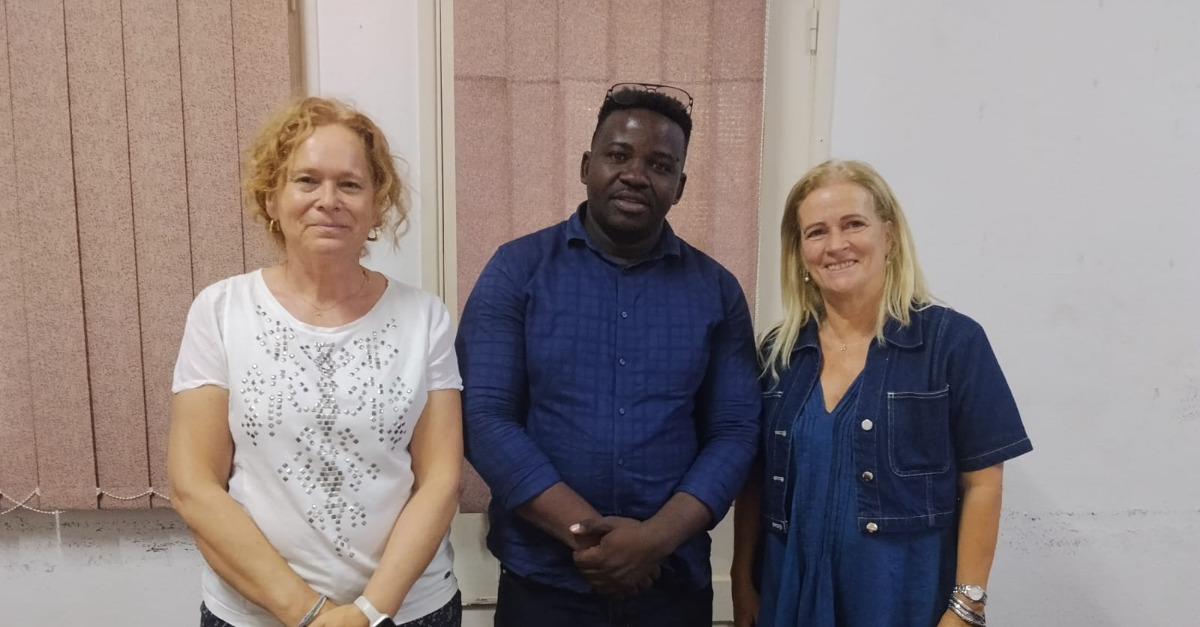
Pictured: Caroline Meier-Quevedo (SVEB), M. Oliveira (UATAF), Madalena Baptista (Helvetas)
What particularly impressed you during your visit?
I was very impressed by the commitment and motivation of the teachers / trainers and the other participants. Despite limited resources, they show tremendous dedication in their work and approach it with great enthusiasm.
What surprised you?
I was amazed at how much importance the participants attach to their clothing and a well-groomed appearance. This showed me just how important this opportunity for further training is to them and the value they place on it.
What was your impression of the participants? And of the teachers / trainers?
I noticed that the participants are used to supporting one another. There is a strong culture of mutual support within the groups. The teachers / trainers, for their part, are very skilled at managing diverse groups and engaging with a wide range of participants.
Were there any amusing situations?
Yes, for example during a teaching session in a hairdressing salon. As no teaching materials were available, the participants used the products and tools they found in the salon to complete the task set – namely, to identify and present local businesses. The situation was a good example of how creatively they work with the resources at hand.
How is the collaboration with Helvetas going?
The collaboration with Helvetas has been excellent. The partners were very accessible throughout the collaboration, and communication was open and transparent.
What distinguishes this work from the promotion of basic skills in Switzerland?
The framework conditions for further training vary greatly. There are hardly any teaching aids such as blackboards or teaching aids for the participants. At the same time, the groups are relatively large, often comprising more than 20 people. Teachers / trainers must therefore be very creative and work with the resources and materials available locally.
Were there any obstacles or difficulties?
Yes. For security reasons, certain areas were off-limits to me. As a result, I was unable to visit all the locations or observe all the activities taking place there.
What is your conclusion regarding the SIM! project?
In summary, it can be said that, in its first phase, the SIM! project has demonstrated that its competence-based approach is relevant, practical and well-suited to the realities of young people’s lives and work in Mozambique. In Phase II, the model should therefore be consolidated rather than reinvented, with particular emphasis on strengthening competence assessment, the professionalisation of trainers and institutional embedding.